TRAFFIC AS A LIVING SYSTEM↔AUTOMATION IN MIXED TRAFFIC◎SAFETY · EMISSIONS · HEAT▰TRAFFIC AS A LIVING SYSTEM↔AUTOMATION IN MIXED TRAFFIC◎SAFETY · EMISSIONS · HEAT▰
Research productMobilitySafetyIntelligence
An interactive platform translating my PhD evidence into accessible mobility insights.
From research to exploration
This app turns the simulation results from my PhD at TU Berlin into an interactive experience. Whether you work with mobility data every day or are simply curious, you can explore the evidence at your own level.
Experiment interface
Network Berlin study areaSource OpenStreetMap importRun selected network
Scenario output
Evidence ready
01 Select02 Run03 Interpret
New research prototype
SUMO, made easier
EZSUMO
Select a packaged network or crop a real street area on the map, configure a scenario, and turn a live SUMO run into readable mobility, safety, and emissions evidence.
I’m Amirhossein Taheri, a PhD researcher in Automotive Engineering at Technische Universität Berlin (TU Berlin). My research explores how connected and automated vehicles can shape safer and smarter mobility systems.
I combine SUMO microsimulation, surrogate-safety analysis, mobility analytics, and AI-supported methods to transform complex mobility data into transparent, decision-relevant evidence.
My PhD centres on traffic simulation. Alongside it, I pursue traffic safety as an independent research line—connecting simulated systems with crash data, statistical inference, machine learning, and visual observation.
PhD research projectTechnische Universität Berlin
Conflict sequence detected
Mobility Safety Intelligence
Doctoral research · Automotive Engineering · TU Berlin
My PhD research platform uses microscopic traffic simulation to examine connected and automated vehicles in mixed traffic. It connects surrogate-safety analysis with headway and fleet scenarios, spatial hotspots, machine learning, SHAP interpretation, emissions, heat, and network-level mobility evidence.
Across my papers I examine crash severity and duration, injury outcomes, vehicle effects, young-driver and rural-road risk, road-level heterogeneity, and spatiotemporal safety patterns.
Women's Electric Scooter Adoption: How Religious and Social Norms Shape Acceptance
Transportation Research Board 2026 Annual Meeting
Conference contribution
17
2026 · Conference
Exploring e-scooter rider comfort through video-based analysis using machine learning on protected lanes
Transportation Research Board 2026 Annual Meeting · Tehran case study
Conference contribution
18
2025 · Conference
Coupling SUMO traffic simulator with PALM microscale urban climate model to assess the impact of traffic waste heat on urban microclimates
12th International Conference on Urban Climate · Rotterdam
Conference contribution
Research product · PhD outputAV/CAV safety & simulation
Mobility Safety Intelligence
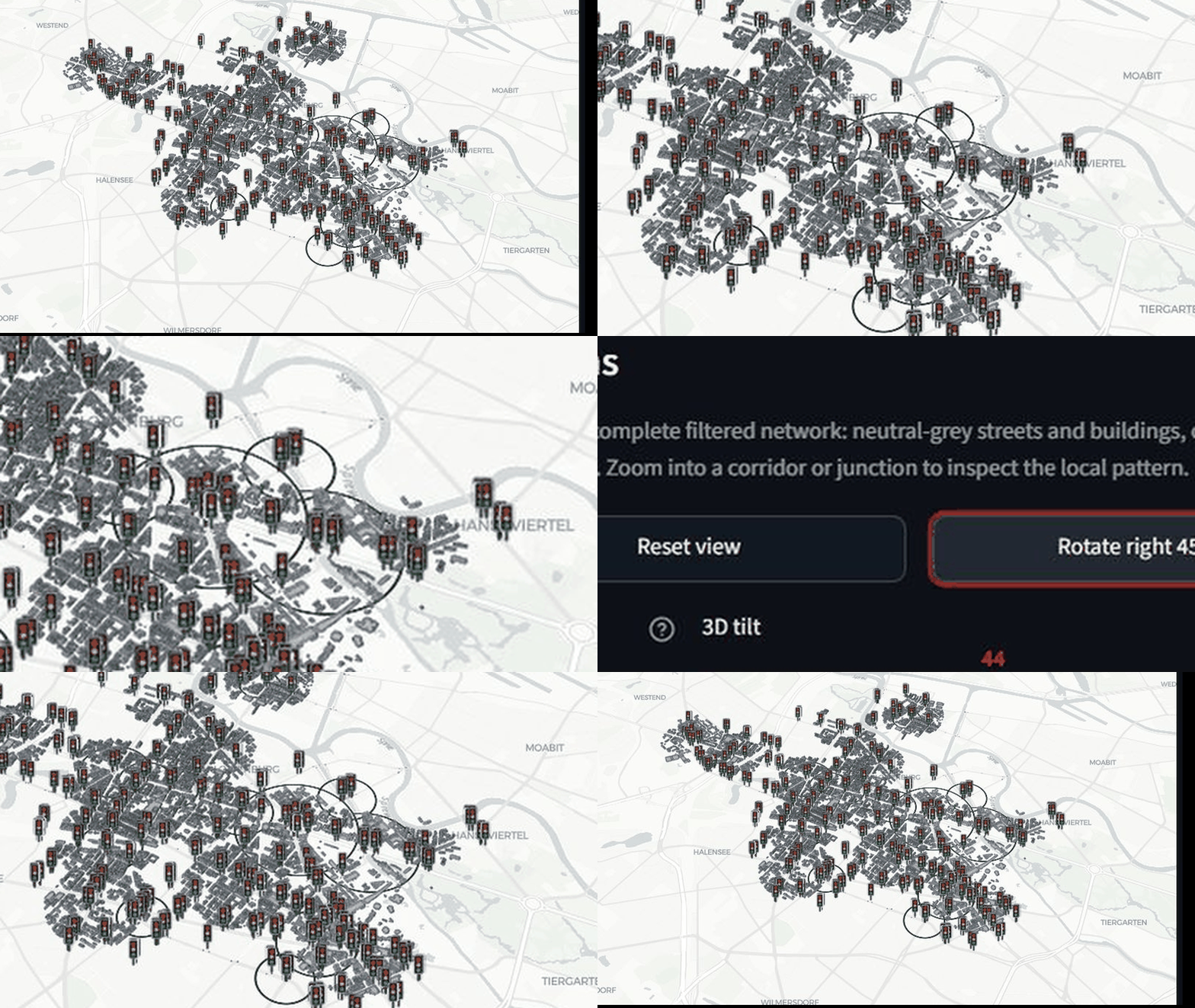
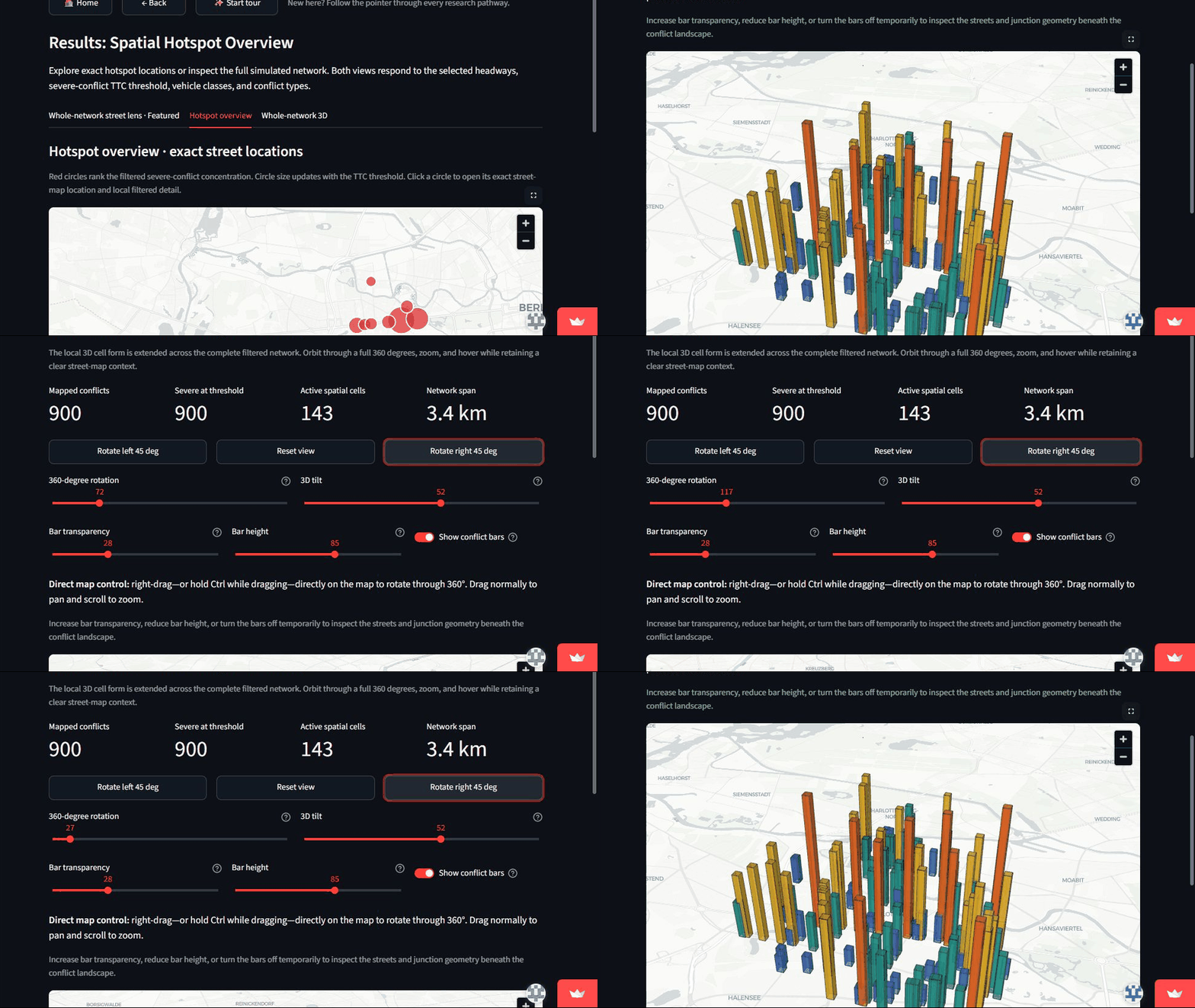
An interactive research product that turns prepared SUMO and SSAM outputs into accessible evidence for technical and non-technical users. It combines scenario and headway comparisons, TTC-based surrogate-safety indicators, standardized Gaussian KDE hotspot ranking, geographic network mapping, local and whole-network 3D lenses, and precomputed LightGBM–SHAP interpretation.
What happens behind the interface
Simulation records are harmonized across fleet scenarios and desired headways, summarized by interaction type and safety threshold, transformed from SUMO coordinates for spatial exploration, and grouped into ranked conflict concentrations. Offline models compare microscopic, policy-lever, and combined feature sets; the application loads the validated prepared outputs without retraining models for each visitor.
Ongoing research2023–Present · Technische Universität Berlin · PhD research
Berlin–Charlottenburg · SUMOLocal hotspot
Safety risk Mobility Emissions
Ongoing evaluation
Adaptive Headway for Safer and More Sustainable Urban Mobility
This ongoing research programme investigates how autonomous vehicles can adjust their following headway according to traffic conditions and location-specific risks. Using the Berlin-Charlottenburg SUMO network, it progresses from local hotspot intervention to spillover analysis and whole-network optimization.
→→
01 — Hotspot-aware headway
Tests whether increasing AV headway near selected high-risk locations can reduce near-miss risk without substantially disrupting traffic.
02 — Spillover-aware headway
Examines whether local safety improvements transfer conflicts, queues or disturbances to surrounding and downstream areas.
03 — Network-wide optimization
Extends adaptive headway across the Charlottenburg network to balance safety, mobility and model-based emissions while limiting unintended impacts elsewhere.
Experiment interfaceBerlin study areaDemand · AV share · speedRun selected network
03 · EvidenceScenario output
Travel time
CO₂
TTC interactions
EZSUMO
A map-first interface for running mobility experiments without handling SUMO configuration files directly. Users can select a packaged network or draw a real OpenStreetMap area, adjust demand, automated-vehicle share, following time and speed, then run SUMO and compare travel time, waiting, CO₂, speed and TTC-based interactions with a fixed reference.
What happens behind the interface
The selected map crop is downloaded from OpenStreetMap and converted into a SUMO network. The interface translates the approved controls into route and vehicle definitions, executes SUMO locally, parses trip, emissions and surrogate-safety XML outputs, and presents a reference comparison. A separate robustness lab uses matched random seeds and paired uncertainty; the optional EZ Agent only helps prepare a constrained study plan and never runs without approval.
Public interactive prototype · SUMO-backed scenario execution
OSM map cropLive SUMO runSafety + emissionsMatched seeds
Jun 2024 – PresentTU Berlin
traffic + urban form → emissions, heat + microclimate
SUMO–PALM Coupled Traffic and Urban Climate Modelling
An interdisciplinary collaboration coupling SUMO traffic dynamics, fuel use and vehicle-level emissions with PALM’s building-resolving climate grid. Traffic outputs are converted into sensible heat and moisture emissions to evaluate localized effects on near-surface temperature and urban thermal conditions in Berlin.
Project scope and reported evidence
The Berlin case study couples vehicle-level fuel use with PALM’s urban-climate grid. District-scale daily mean warming is small under the investigated conditions, while localized responses are stronger along traffic corridors and near intersections, especially during weak-wind periods.
Bayesian Deep Learning for Crash Duration Prediction
Developed and evaluated an LRT-CNN-VD framework using Pennsylvania crash-sequence data. The Bayesian 1D-CNN combines the local reparameterization trick, variational inference and variational dropout for accurate, uncertainty-aware crash-clearance duration modelling.
Methods and findings
The model was compared with CNN, CNN with dropout, Random Forest Regression and KNN Regression. It achieved the best test RMSE and MAPE with substantially lower tuning and training time than dropout regularization; SHAP identified influential factors including temperature, humidity, visibility, crash severity, weather and incident distance.
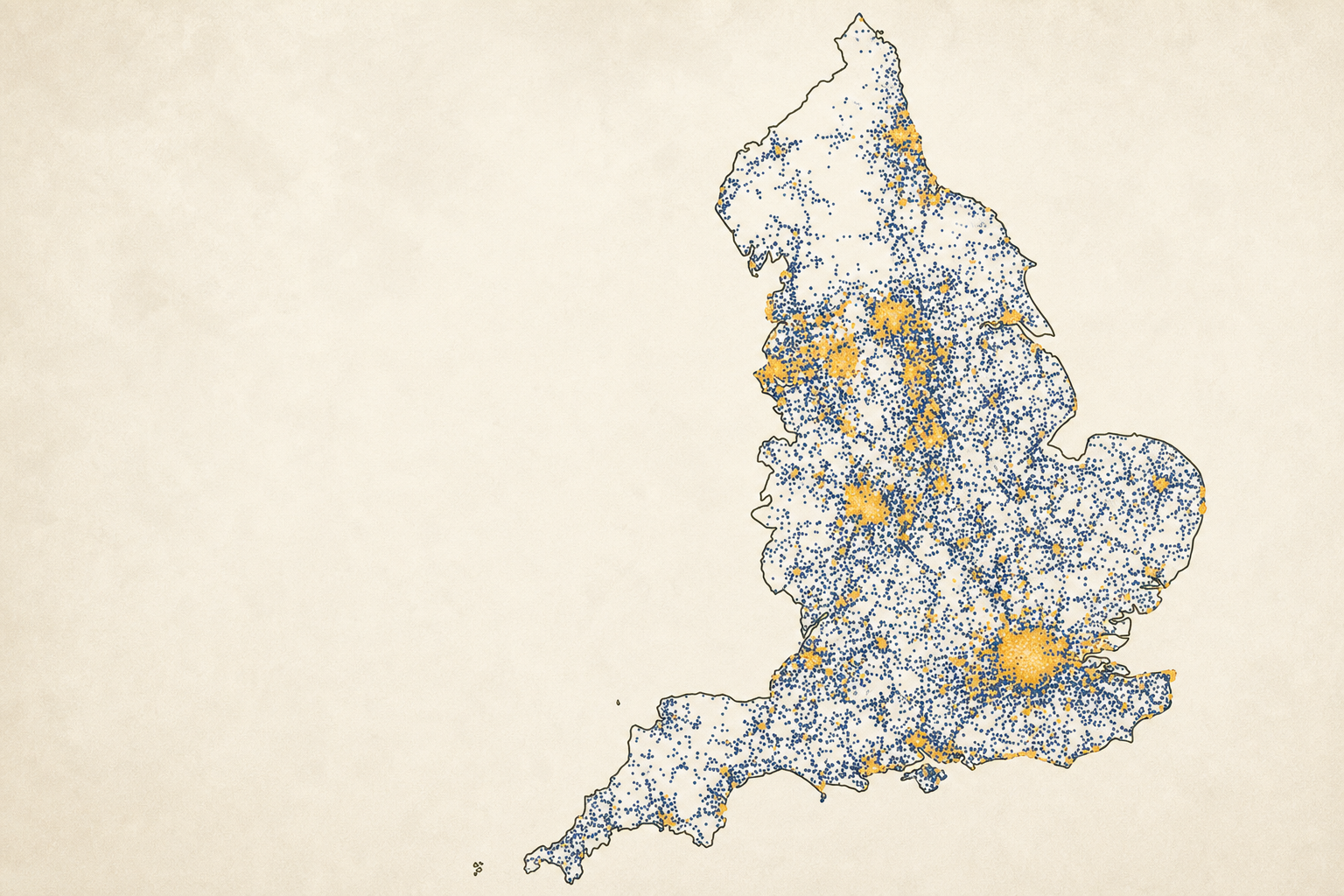
Originating in a master’s thesis I supervised and later developed into a co-authored publication, this study examined injury severity among drivers aged 17–24 using England’s STATS19 data from April 2019 to February 2022.
Methods and findings
Standard CART was compared with Random Undersampling of the Majority Class CART to address severe class imbalance. RUMC-CART improved identification of serious injuries; important predictors included casualties, vehicles involved, vehicle type, speed limit, lighting and urban–rural context.
Vehicle Crashworthiness and Driver Injury Severity Modelling
Investigated how vehicle type and weight influence driver injury severity in fixed-object, rollover and two-vehicle crashes. Six years of police-reported rural crash data were used to develop a logistic-regression crashworthiness index across vehicle categories.
Key finding
Crashworthiness varied substantially by crash scenario. SUVs and trucks generally offered stronger occupant protection, while pickup trucks performed less well in several comparisons; heavier vehicles were not uniformly safer, with the 1,500–2,000 kg group showing the lowest estimated injury/death odds in fixed-object crashes.
Hybrid Traffic Congestion Prediction Using LSTM–ARIMA
Developed a hybrid forecasting framework that combines LSTM neural networks with ARIMA residual modelling using 15-minute congestion-index observations from a large metropolitan road network.
Method
The approach was designed to capture nonlinear temporal patterns and the remaining time-series structure, and was evaluated against standalone LSTM forecasting using MAE, RMSE and R². The project contributes to traffic-state forecasting and hybrid machine learning for mobility decision support.
Independent project summary · no associated paper
LSTMARIMATraffic forecasting
Academic service
Peer review experience.
I contribute to scholarly quality through peer review in transportation, traffic safety, mobility analytics, and data-driven research, including work associated with Taylor & Francis, Springer Nature, and transportation conferences.
01
Transportation & mobility
Research on mobility systems, behaviour, operations, and future transport.
02
Traffic & road safety
Crash outcomes, surrogate safety, risk modelling, and safety performance.
03
Analytics & AI
Statistical, machine-learning, spatial, and simulation-based evidence.
Academic development
Supervision & credentials.
I support emerging researchers in study design, simulation and data analysis, interpretation, and academic writing. The selected work below spans automated mobility, crash severity, machine learning, and policy evaluation.
2025–2026BSc thesis
Anton Dorn
Assessment of the Safety Impacts of Autonomous Vehicles in Relation to Market Penetration and Vehicle Fleet Composition: A SUMO Scenario Study for Berlin-Charlottenburg
2025MSc thesis
Yini Li
Evaluation and Sensitivity Analysis of Calibrated Traffic-Safety Parameters in Connected and Autonomous Vehicle Simulations
2025BSc thesis
Arton Advula
COVID-19 Policy Measures and Road Traffic Injury Severity in Great Britain: A Hybrid Logistic Regression Approach
2024MSc thesis
Jing Yang
The Impact of Connected and Automated Vehicles on Road Safety: A Meta-Analysis Considering Market Penetration Rate
2024MSc thesis
Siguang Zhu
Machine Learning for Enhancing Road Safety: Evaluating Crash Severity Prediction Models - A Case Study of Australia
2024MSc thesis
Kevin Switala
Analysis of Imbalanced Traffic Data: A Comparative Study of Machine Learning Models for Predicting Accident Severity in England
Open channel
Build safer, smarter mobility together.
For research conversations, collaborations, simulation work, or questions about a paper, use the email button below to contact me at Technische Universität Berlin.